Thursday, April 4, 2024

Google ‘considering Hubspot acquisition’

Google is reportedly in talks about putting in an offer to acquire Hubspot.

The search giant has allegedly been in discussions with Morgan Stanley about how much it should offer to buy the online marketing software company, which is said to be valued at $35 billion. However, no offer has yet been made.

Why we care. Buying HubSpot would help Google expand its services in the growing CRM software market, enabling it to reach more enterprise customers with the budget to allocate to marketing and advertising.

Why now? Alphabet CEO Sundar Pichai has been exploring new ways to accelerate growth after the tech giant reported lower-than-expected ad revenue in the fourth quarter of last year. Google Search and YouTube are also facing increased competition for advertising budgets from platforms like Facebook, Instagram, TikTok, and Amazon.com.

Antitrust concerns. Google is reportedly concerned that antitrust regulators may not approve the acquisition. If the acquisition is successful, it would be a significant deal amidst increasing privacy regulations under U.S. President Joe Biden’s administration.

Get the daily newsletter search marketers rely on.


What Hubspot is saying. A Hubspot spokesperson told Reuters:

  • “As standard practice, HubSpot does not comment on rumors or speculation. We continue to focus on building a great business and serving our customers.”


from Search Engine Land https://ift.tt/LPKDo6v
via IFTTT

Google AI overviews launch in UK

Google’s AI overviews are beginning to appear in search queries for a “small slice” of logged-in users in the UK.

Google’s Search Generative Experience has been in testing as a Labs experiment in the U.S. since May 2023. SGE has never been available in the UK.

Why we care. SGE, AI overviews – whatever you call it – could potentially change how people search and the amount of organic traffic your site gets from Google. It’s still unknown how often (if ever) searchers click on the citations in Google’s AI-generated answers.

Future of SGE. Google began testing AI overviews from SGE on a “subset of queries, on a small percentage of search traffic in the U.S.” as Search Engine Land reported on March 22. This seems similar to the UK search traffic test.

Some have speculated SGE could launch widely at Google I/O, but Google has not confirmed a date. And Elizabeth Reid, Google VP, Search, has indicated there likely won’t be a light-switch “moment” when SGE replaces Google Search as we’ve known it.

Could SGE become paid? Meanwhile, Google is considering making AI-powered search features available only to subscribers, according to a Financial Times report. It’s unclear if this is specific to SGE or other AI search features. Perhaps these “premium” features would be part of the Google One paid bundle that includes Gemini.

Essentially, the report indicated “classic” Google Search would remain free. Ads would continue to appear alongside search results even for subscribers. No decision has been made on whether or when it will launch:

“Google said the company was ‘not working on or considering’ an ad-free search experience but that it would ‘continue to build new premium capabilities and services to enhance our subscription offerings across Google’.”

– Google considers charging for AI-powered search in big change to business model (subscription required)


from Search Engine Land https://ift.tt/yqBN2lS
via IFTTT

How to build a future-ready SEO strategy

Crafting an SEO strategy requires more than just a focus on the present. To succeed, we must anticipate future changes and adapt accordingly. 

In this article, we’ll discuss: 

  • The developing changes to the SEO industry.
  • What those changes mean for our SEO strategies.
  • How we can address and grow with those changes.

Note: When future-proofing an SEO strategy, consider that most businesses plan in 5-7 year horizons, not 20-30 years. While long-term goals matter, immediate relevance lies in shorter timeframes.

Strategy creation: Assumptions

Within this article, I’m making a few assumptions about how you created your strategy.

I recognize best practices end up being occasionally compromised for one reason or another, so I’ll lay these assumptions out for you:

  • The SEO strategy created has already been lined up to the 1-3 year business plan and goals.
  • You have a measurement plan in place for your tactical buckets.
  • You know what the 5-7 year goals are for the business. (e.g., You’re at Netflix and know they want to dominate the video game space in seven years.)

If you have to compromise on any of these elements, address this before focusing on future-proofing your strategy. You must know the kind of future your business wants to walk into – and have a way to measure it – before getting too far down the road. 

If you’re compromising on measurement and are unsure when or how to get the perfect measure, find a solution that enables you to monitor progress and value effectively.

The first port of call I’d recommend would be to speak to your finance team. See how they’re measuring similar activities in channels that aren’t typically as directly measurable, like TV or radio and other forms of traditional media. 

If they don’t have an easily transferable metric, a few other ways to approach it include: 

  • Getting a “faith-based” number from finance: If they don’t have a calculation you can use, they may just have a value they assign to that channel because someone somewhere made a calculation 20 years ago, and it’s now considered a gold standard internally.
  • Use a relative value: Each action on the website has a relative value to each other – signing up for a newsletter probably isn’t as valuable as a sale, etc. Put your metrics in that list, speak to someone with decision-making power, and ask them where your goals sit in the hierarchy of value.
  • Use a default value of $1 for everything: This is the worst-case scenario. The goal is to elicit conversation when you share this number and people ask where you got it from. 

If you’re having trouble even getting tracking for those goals implemented, I’d follow a similar process to at least start putting a number against it. 

Whether that’s an assumed conversion rate from lead to sale or an estimated number of organic newsletter signups based on the current channel split, you will find a way to put some easily explainable number against a goal that will at least start a conversation. This will hopefully lead to a conversation around how to measure it more precisely. 

For a more in-depth conversation about goal tracking, read this article by Avinash Kaushik. (Here, he’s specifically talking about measuring offline conversions, but it still applies when you’re having trouble getting visibility around value or perceived value.)

As we are moving into a more fractured world of measurement, I would also make sure you clearly document your sources and assumptions. As we’ll discuss later, measurement for SEO will be even more obtuse now than ever. One of those black boxes of measurement will probably be Search Generative Experience (SGE).

Generative search, surfaces and SEO

There are a few ways I think about generative search:

These ways of thinking about generative search move beyond standard website optimization into brand building and collaboration with other marketing channels.  

So, what does this mean for you as an SEO professional? 

Get social. If you haven’t already, your job and the success of your work and strategy are starting to depend on much more than the development (or engineering) and content teams. 

Intrinsically, Perspectives (now Forums) within SGE is social media, but we know Google is pulling from much more than that. 

So you want to start talking to other teams, particularly social. Honestly, I’d start learning about how they’re optimizing the content on those platforms and if there’s an angle or level of expertise you can share. 

It’s also time for a perspective shift as a professional: it’s not just about the website anymore. It’s about your brand’s content, anywhere it happens to be published. 

Measurement

I don’t have a perfect solution for measurement now or in the future. However, I anticipate measurement will become increasingly nebulous and extrapolated.

We already know that SGE and other Google surfaces (News, Discover, etc.) are poorly and incorrectly measured by default through source/medium attribution in Google Analytics, often being attributed as (direct). 

As those surfaces fracture further and SGE develops, the measurement will likely continue to become less accurate. 

Emphasis will likely be placed on proof of concepts, where we establish a connection between actions and outcomes, followed by larger programs that are inherently more challenging to measure. Or it’ll be about market comparisons to justify work being done rather than, “Well, putting keyword A at position B will give us X dollars of incremental revenue.” 

It will be even more important that you, as an SEO professional, ladder up your recommendations to the greater strategy of the business rather than excluding those from your thought process because it will probably be more difficult to line up a specific revenue amount to your organic efforts and get approval through brute force. 

Get the daily newsletter search marketers rely on.


Education

The future of measurement is one of the reasons why it’s important, if you’ve not already, to build an ongoing training or education program into your business. 

Even if it’s a one-person shop, give yourself time to set aside and learn from some great folks – alongside websites like this, there are some fantastic newsletters out there that will pull together the updates in SEO for you. 

If you have stakeholders, it’s even more important that they understand both the foundations of SEO and the way the sands are shifting and what the future will probably look like and why.

Find the metaphors relevant to your audience. Give examples and case studies from your own websites, if you can get them, and if not, use examples from within your industry. From your competitors. Get your stakeholders to buy into the fact that, in many ways, digital media will start looking a lot more like traditional media rather than digital media measurement as we’ve known it for the last decade. 

You also want to continue educating yourself on SEO and how the business works. Where do you need to get approvals? At what point is an initiative considered break-even or impactful? 

Dig deeper: How to use SEO education for stakeholder management

Processes and approval gates

What’s a strategy if you can’t execute on it? 

To future-proof your strategic efforts, and likely as a part of your education efforts, you want to make sure that SEO is included in any and all relevant processes. This might include: 

  • Codebase quality assurance
  • Brand campaign go-to-market
  • Re-branding
  • Re-platforming
  • New product launch
  • Annual high-sales periods like Black Friday

Again, this will mean going out and talking to folks, so your days might become a balancing act of getting stuff done and laying the groundwork to get stuff done in the future.

It also means you’ll likely want to (or have to) compromise on smaller best practices that may not matter as much in your industry, like chasing a perfect score on Core Web Vitals or rewriting your metadata. 

While none of us have a crystal ball to see what, exactly, SEO will look like in a decade (except maybe Michael King), when you take your strategy and then build a framework of training, processes and collaboration around it, it’s more likely to be able to stand the test of time. Bend rather than break as market and technology landscapes shift around your strategy. 


from Search Engine Land https://ift.tt/o8sYpca
via IFTTT

13 questions to diagnose and resolve declining organic traffic

There’s nothing like spotting a nose-dive in organic traffic to make an SEO’s heart skip a beat.

The thought of digging in and finding the issues can feel downright overwhelming. The contributing factors behind SEO performance are numerous, interconnected and often complex.

Where do you even start? 

After over 15 years of playing an SEO private investigator – in-house and as a consultant – I’m sharing 13 questions that have helped me close even the most curious cases. 

Together, they make up the framework for a methodical analysis that covers all your bases and uncovers all the issues. 

1. Are there signs this might be a tracking issue?

Before we set out in search of any issues, let’s make sure that this isn’t just a tracking bug. 

We’re looking for a couple of common signs: 

  • Big data discrepancies: Google Search Console is reporting vastly different metrics than your internal analytics platform. (Small disparities are normal, so don’t sweat those. They are, after all, different metrics measured by different tools, using different methodologies!)
  • Other channels: If site traffic is down across the board, there’s a good chance something is up with your Analytics tracking code or Tag Manager implementation.

Dig deeper: Top 5 SEO data pitfalls to avoid for accurate analysis and reporting

2. Is this a brand problem?

The more your organic traffic is made up of clicks from branded searches, the more reason to check in. If fewer people are searching for your brand by name, that’s a problem but not inherently an SEO problem. 

Brand search issues

Google Search Console can tell you fairly quickly. Filter down to the keywords that include your brand name in the string and compare recent performance to historical performance. 

Here’s an easy example of what that might look like for my company, using GSC’s Query filter functionality and RegEx: 

GSC query filter - Brand name

Are you seeing relatively flat non-brand traffic changes, but a big brand swing? The less people see a brand, the less they search for it. 

That means it’s time to look at what’s different at the brand and/or channel level, including things like negative press, sunset ad campaigns, or significant rollbacks in acquisition spend. 

3. Where is non-brand performance down?

If non-brand performance is the primary factor, look for the leaks – aka the URLs and keywords that are trending down. 

Filtering your GSC data will help spotlight any patterns, which can go a long way in pinpointing the actual issue(s).

Mind all four primary metrics – clicks, impressions, CTR and average position – for each of the views below. (Combine this data with first-party analytics tools like GA4 and Matomo, as needed, to dig deeper.)

  • Seasonality: Does year-on-year data show the same level and rate of decline at the same time each year?
  • URL: Which page(s) are losing traffic? Do they share connections like a URL directory or JavaScript template?
  • Query: Which search terms are contributing to the decline? Are they related in terms of topic or focus? 
  • SERP feature: Did losing featured appearances push your organic results below the fold (and clicks along with them)? Note that you might need to lean on a third-party tool for this, like Semrush, as GSC won’t report on all placement types. 
  • Shopping and media: Are Google Shopping, Image search, or Video search causing declines you won’t see in your organic rankings? (Using the Search Type filter)
  • Geography: Do regional changes in your rankings show that user interest is dwindling or that the SERP is now showing localized search results? 
  • Mobile: Did you lose more visibility on smartphones and tablets vs. desktops?
GSC - Non-brand performance

4. Do we care about this traffic?

Sometimes, losing traffic doesn’t actually matter all that much. 

It might feel a little taboo to say, but it’s true. The real value of traffic is whether users convert – whatever that might mean for your business. 

Generally, the sources of the greatest conversion loss should always get attention first. If the site is losing organic clicks from keywords or URLs that don’t contribute to conversions in any meaningful way, it could be OK not to take any action. 

Not every page leads directly to a conversion – especially pages higher up the funnel, like blog posts, where users are just looking for information.

If your analytics reporting defaults to a last-touch attribution model, you won’t see the true conversion value of traffic landing on higher-funnel pages. So it’s crucial to check both first- and last-touch. 

The former tells you which URLs lead people to future conversions, while the latter tells you which pages drive purchases when users are ready. Both are important!

5. What does the trend line tell us?

If you’ve made it this far, it’s probably because you’ve determined that you have an SEO issue and it’s causing you to lose traffic that’s important to the business.

The search begins! First stop is the trendline. 

If your trendline shows a large drop in a short amount of time (steep and to the left), something’s probably broken. You might see this after major development work, like a migration, or shortly after a Google algorithm update.

A more curved and gradual trendline points to issues happening over time, like thin content stacking up, the market landscape evolving, or losing referrals faster than you’re winning them.

Trend line - web performance

6. Did something change with our site content?

Content changes, outside of major changes to big portions of the website, are usually associated with a gradual trendline. (Exceptions include recent helpful content updates.)

There are a couple of reasons why content issues are almost inevitable at some point unless you’re constantly pruning, updating and evolving content. 

  • Search engines create better experiences by improving their ability to serve users helpful content – and their and users, criteria for helpful content change over time. 
  • As sites create new content that meets modern standards, old content that doesn’t meet those standards adds up.  

A content audit is a natural next step if traffic is falling because rankings are slipping sitewide, or across many pages.

Dig deeper: 16 reasons why your page isn’t ranking on Google

Get the daily newsletter search marketers rely on.


7. Are there new or major technical issues on the site?

A trendline that looks like it followed an Olympic diver off the board is a good sign to look for major technical hiccups. A gradual trendline could be the result of smaller technical issues stacking up over time. 

Either way, a technical audit is the best way to find any needles in the haystack.

Look back at what you learned when you were slicing and dicing performance in GSC. Were there patterns that emerged? They could point in the direction of where to look for technical issues. 

For example, if most of the losses come from a specific site directory, there might be something broken on the page template used to create those URLs. 

If there’s a really steep drop in traffic, it’s most often a matter of indexing or crawling (i.e., whether Google can access your content, read it and recommend it on SERPs). Robots.txt, meta robots and canonicalization are top priorities in this case.

There’s what you can control on your own site, then there’s what happens outside of it. Either can have a huge impact on your SEO performance. 

The first thing we want to check in terms of external SEO factors is backlinks since they play a big role in helping Google gauge the quality of a domain. Luckily, there are lots of SEO tools out there that make this easy (Ahrefs, Majestic, etc.).

Determine whether you’ve lost backlinks on a meaningful scale or any referrals from high authority sites. It can be cause for concern if you see one or both, especially for younger sites which may have less authority in the first place. 

A pretty common cause for losing backlinks over time is historical PR work. As publications clean up their old content, the backlinks disappear and there aren’t as many new referrals to fill the void.

And since many publications are owned by the same parent company, these efforts – and the resulting loss of links – can stack up quickly. This is especially true for industry publications. 

9. Was there a recent algorithm update?

If you’ve never had a site you work on hit hard by an algorithm update, then it probably seems a little like the SEO boogie monster. The legends are all too real.

When Google makes changes, being on the losing end can lead to traffic swings of epic proportions.

Lily Ray on X

Google announces many of its algorithm updates, but there are those that they don’t. And that adds a layer of complexity because how the heck do you find the “shadow” updates?

The SEO community is up to the task! There’s documentation and even tools where industry experts are keeping tabs on what’s shifting in the index, when those shifts signal an update and where it’s having an impact.

A couple of my favorite resources are: 

  • Mary Haynes’ Google Algorithm Update List: It includes a running list of confirmed and unconfirmed updates, along with helpful commentary. 
  • GSC Guardian: A Chrome extension created by Darwin Santos that overlays updates and uptime issues from Google onto your Google Search Console charts.

10. Did the SERP change in meaningful ways?

The knowledge panel is by no means new. But if you were in the SEO world back when it was rolled out in 2012, you might have thought it was the end times. 

Knowledge panel - Greta Gerwig

If users no longer had to click on a result to see the information they were looking for, organic results were set to take a hit – even if rankings stayed the same.

In hindsight, the knowledge panel is just one of many changes Google has made to search engine results pages. Whether it’s making ads more prominent or one of any number of featured snippets, each new iteration tends to push traditional organic results further below the fold.

And now, with some SGE results in the wild, it’s happening again!

SERPs features - Greta Gerwig

Long story short, the structure of the SERP is far from static – and that’s a point to consider in your investigation. 

11. Is the domain being penalized?

It’d be remiss to talk about penalization without first making a clear distinction between getting “penalized” and getting pummeled by an algo update.

The impact of an algorithm update can look and feel a lot like penalization. Except, it’s not unique to your site or just a byproduct of Google trying to make Google better. 

A penalty, on the other hand, is the result of Google determining that your site is extremely low-quality or harmful in some way. 

It’s a real possibility, even if your site doesn’t have malicious intentions or isn’t actively engaging in spammy SEO tactics. To find penalties, look for a notification in your GSC account (Security > Manual actions).

12. Did competition change?

With every iteration of the Olympics, new world records are set across different sports. New competitors emerge, existing competitors improve and champions get knocked off the podium. 

That’s the nature of competition. 

In the same way, every domain is in a race against other domains to rank on top. If the leaders set it to cruise control, other domains hit the gas and eventually catch up. 

Losing rankings and featured placements to competitors may mean that they’re doing something right, or it may simply mean that Google is testing which results make users happier. Looking at on-page and domain-level factors via a competitive analysis can illuminate their potential advantages.

For on-page factors, ask yourself:

  • Does the content do a better job of meeting the user’s needs?
  • Is the content different from other competitors (including your domain) in terms of quality and perspective?
  • Does the structure of the information make it easy to understand?
  • Is the author of the content more of an authority on the topic than other authors?
  • Does the page provide an elevated user experience?

For domain-level factors, create a scorecard (table) where you can see the following metrics side-by-side by competitor:

  • Domain rating or domain authority
  • Number of indexed pages
  • Backlinks
  • Referring domains

13. Are users behaving differently?

As the world changes, society changes – and preferences change in tandem.

For example, if I asked a barista for an oat milk latte 10 years ago, I would have probably gotten a weird look. Today, it’s a staple in many coffee shops. 

You can see that phenomenon quantified in Google Trends, which reports that interest levels in oat milk have shot up over the past five years. 

Search interest over time - oat milk latte

When the interest in a topic, industry, service, etc. grows, so does the total number of clicks available to win. When it shrinks, clicks drop – even when rankings stay consistent – because the lead pool as a whole is smaller. 

Quantifying changes in keyword volume over time can serve as a form of market intelligence that gives you a view into whether overall demand is shrinking.

Dig deeper: Why traffic declines despite solid rankings and what to do

Take your findings to the team 

Once you’ve adequately answered all of these questions, it becomes a matter of weighing the issues on your list against one another. 

Dig in to understand what’s having the most outsized impact and determine what you want to fix. And, just as importantly, document it in a way stakeholders can understand. 

The greater your ability to build a strong business case, the more likely it is to garner support, get fixed and turn results around. Happy investigating!


from Search Engine Land https://ift.tt/fRqQ9tO
via IFTTT

Wednesday, April 3, 2024

Facebook launches enhanced full-screen video player with key upgrades

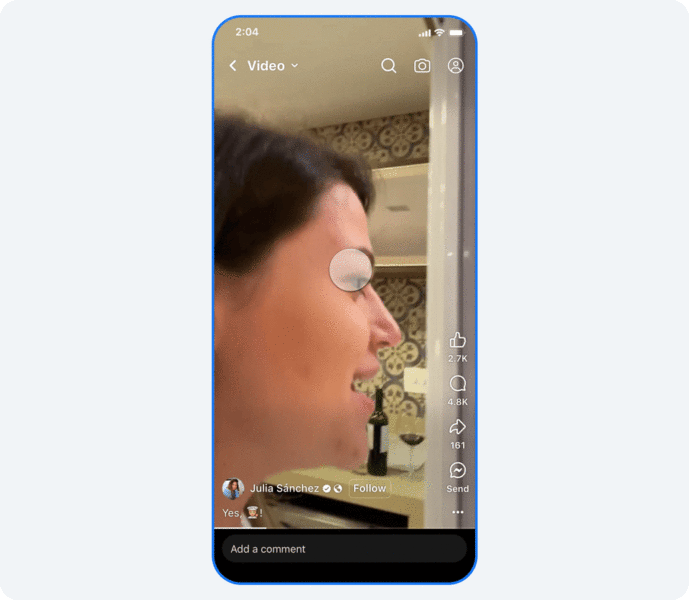
Facebook is launching an updated video player that provides a consistent design for all video lengths, including Reels, longer videos, and Live content, in one fullscreen.

This updated video player, which bears a striking resemblance to TikTok, will initially roll out on iOS and Android devices in the United States and Canada, with a global release scheduled in the coming months.

Why we care. The full-screen video player, with its improved features, is created to grab people’s attention and increase interaction with your content.

What’s changing? Now, whenever you tap on a video in the Facebook app, it will always open in fullscreen and be oriented vertically as demonstrated in the gif below:

Although videos will appear vertically automatically, you’ll notice a new fullscreen option on most horizontal videos that enables you to switch to landscape view for better viewing.

Previously, depending on the video’s length or where you were watching, you might have seen horizontal videos or videos playing in a Feed-like player.

Enhancements. Facebook’s updated video player will offer several enhanced features, such as:

  • Improved recommendations for videos of all lengths, tailored to your interests. For instance, you might receive suggestions for Reels providing quick makeup tips or longer tutorial videos on DIY home improvements, curated from experienced homeowners.
  • New controls offering you more flexibility in how you watch videos, which will be rolled out over the coming weeks.
  • The ability to easily skip to the part you’re most interested in using the slider at the bottom of the player.

What Facebook is saying. Facebook said in a statement:

  • “Outside the new player, you’ll also now see more relevant video recommendations, regardless of length, on Feed and on the Video Tab. And while Facebook continues to be the home for all types of video, we’ll show even more Reels to meet the growing demand for this format.”
  • “These updates also mean that more types of creators will have more opportunities to tap into additional audiences they might not have reached before.”

Get the daily newsletter search marketers rely on.


Deep dive. Read Meta’s announcement in full for more information.


from Search Engine Land https://ift.tt/rGyDRo8
via IFTTT

Microsoft is upgrading native campaigns to enhanced CPC

The Microsoft Advertising Platform is upgrading all existing image and feed campaigns on a manual cost-per-click (CPC) bid strategy to enhanced CPC from May 13. This upgrade process is expected to take a few days but should be finalized by May 17, 2024.

Additionally, all manual CPC bidding for newly created native campaigns will be phased out from April 30.

What is enhanced CPC? Enhanced cost per click is a bid strategy where you set your ad group and keyword bids, and Microsoft Advertising automatically adjusts your bids in real time to increase your chances for a conversion.

What is manual CPC? With the Manual CPC bid strategy, Microsoft Advertising uses the bids you have manually set every single time.

Enhanced CPC benefits. Microsoft asserts that enhanced CPC offers several advantages compared to manual CPC, such as:

  • Automatically adjusting your bids in real time based on conversion likelihood; increasing bids for high-converting auctions and decreasing them for low-converting ones.
  • Always respecting the base bid you set as the primary lever by the bidding strategy. These bids are optimized at auction time to enhance performance and drive more conversions, helping you remain competitive in the dynamic marketplace.
  • Ensuring the base bid you set is never exceeded.
  • Leveraging combined signals like search queries and bid modifiers for informed decisions to enhance advertiser performance.
  • Always starting with the bids set by your bid management tool before making any adjustments.

Why we care. To maximize the success of your campaign after it’s migrated to enhanced CPC, there are several steps you can take to optimize it. However, if enhanced CPC doesn’t align with your goals, there are alternative options available.

Who’s affected? This change only affects native image and feed campaigns using manual CPC bidding. It doesn’t impact other campaign types like manual CPM, Connected TV ads or search campaigns extended to audience placements, which already use automated bidding solutions.

Enhanced CPC alternatives. If enhanced CPC doesn’t fit your goals, you can opt to switch your native campaigns to maximize conversions. With this bid strategy, you can set your target CPA, allowing you to increase conversions while still controlling the CPA goal you aim to achieve.

Next steps. No action is needed from you to prepare for this change. However, you can optimize certain areas to ensure you’re set up for success.

  • Conversion Tracking: For optimal results, Microsoft strongly recommends using enhanced CPC alongside conversion tracking. Ensure your UET tag is placed on all pages of your site and set up your conversion goals. While not mandatory for enhanced CPC, this setup can enhance performance by providing additional signals.
  • Offline conversions: If you depend on offline conversions, it’s advisable to upload your offline conversion data daily. You can easily do this by setting up a scheduled recurring import.
  • Attribution model: Consider changing your conversion goal attribution to “last touch.” This allows you to optimize automated bidding for both click-based and view-through conversions, which are conversions resulting from ad impressions.

What Microsoft is saying. Microsoft said in a statement:

  • “By following these steps, you can make sure that your campaigns are ready to succeed, deliver the best results and meet your marketing objectives. If you want to stay ahead of the game, you don’t need to wait for your campaigns to switch to enhanced CPC—begin using automated bidding strategies today to help you reach your goals and improve your campaign performance.”

Get the daily newsletter search marketers rely on.


Deep dive. Read Microsoft’s announcement in full for more information.


from Search Engine Land https://ift.tt/mbTU0dx
via IFTTT

Tuesday, April 2, 2024

YouTube unveils 3 new updates, including live stream reaction analytics

YouTube unveiled three new updates for content creators, intended to provide them with a deeper understanding of their audience and enhance the user experience they offer. These updates include:

  • Live stream reaction analytics.
  • New and returning viewer impression breakdown.
  • The ability to live stream to YouTube in HDR.

Live stream reaction analytics. YouTube is introducing new real-time analytics for live streams, enabling creators to monitor viewer reactions as they happen. This data reveals the number and types of reactions received, for example, emojis like love hearts or party poppers.

To access this information, simply visit your content and navigate to the overview tab. Note that this feature is currently exclusive to Studio web and mobile.

Impression breakdown. YouTube is rolling out a new filter that allows you to see the number of impressions segmented by new and returning viewers. This feature aims to help you gain a deeper understanding of your audience, enabling you to adjust your content strategy to attract both new and returning viewers if you so wish. You can access this feature in YouTube Studio Analytics under advanced mode.

HDR live streaming. You can now live stream to YouTube in HDR. Conor Kavanagh, Lead for Monetization Policy at YouTube, explained the advantages this new functionality offers:

  • “With HDR, you get crisper whites, inkier blacks and better-looking colors that pop. HDR also allows you to capture much more detail in your stream because fine-grained color gradations are preserved instead of being smeared out, resulting in hyper-detailed, hyper-realistic streams for your viewers.”

With the latest OBS 30.1 release, you can now stream in HDR to YouTube via RTMP. This allows you to use your existing RTMP workflows and provide your viewers with the highest quality experience that YouTube offers. Additionally, you can live stream in HDR for gaming if the game you’re playing supports HDR. To do this, ensure that your monitor supports HDR and that your camera, if applicable, also supports HDR for PQ or HLG.

Please note that currently, you can use the hgvc Kodak to stream in HDR, but streaming HDR with ab1 is not yet supported.

Why we care. Live stream reaction analytics and breakdowns of new versus returning viewer impressions offer deeper insights into your audience, allowing you to adjust your content strategy accordingly. Additionally, HDR live streaming provides higher-quality videos for your viewers, which could potentially help boost engagement and create a better user experience.

Get the daily newsletter search marketers rely on.


Deep dive. Watch YouTube’s announcement in full for more information.


from Search Engine Land https://ift.tt/wxdoVNn
via IFTTT