Monday, June 24, 2024

Google automates lead credits for Local Services Ads

LSA

Google is rolling out automated Local Services Ads lead credits in July, streamlining the process for advertisers to receive credit for poor-quality leads.

Why it matters. This change aims to save time for advertisers and ensure more equitable distribution of ad credits, particularly benefiting those with limited resources. This will potentially affect advertisers’ budgets, lead quality and overall experience with the platform.

How it works:

  • Google’s machine learning models will automatically review all leads.
  • Invalid leads will be credited without manual disputes.
  • Credits typically are applied within 30 days.

The big picture. Since launching in 2017, Local Services Ads have evolved, but the manual dispute system has become challenging to scale and vulnerable to gaming. 

  • This automation addresses disparities in lead disputing practices among advertisers and aims to improve overall lead quality.

Key changes.

  • No more manual lead disputes are required.
  • “Job type not serviced” and “geo not serviced” leads will no longer be credited.
  • Overall, more leads are expected to be credited on average.

Exceptions. The system won’t apply to healthcare verticals or advertisers in EMEA.

What’s next. Advertisers are encouraged to provide feedback on every lead through the Lead Feedback survey to help improve future lead quality.

Between the lines. This shift reflects Google’s growing capability to use AI for quality control in its advertising products.


from Search Engine Land https://ift.tt/goLiV0n
via IFTTT

Accurate tracking data: The key to optimal ad performance

In the early days of digital advertising, it was pretty straightforward. Put in some keywords, set budgets and track your clicks and click-through rate. 

As ad platforms evolved to measure actual conversions, we improved our PPC ads to better achieve our business goals.

In recent years, ad platforms have evolved even more, introducing smart bidding options that allow advertisers to control bidding to generate the most conversions, highest conversion value or lowest cost per conversion.

However, when utilizing these bid strategies, your ad performance can only be as effective if your data is correct. 

You may have heard the term GIGO – garbage in, garbage out. In data analysis, if we put bad data into the system, regardless of its advancement, the data we get out of that system will not be accurate. 

How accurate is the data we’re feeding back into these ad systems?

Take the target ROAS (return on ad spend) as an example. Suppose the revenue data we feed back into the ad platform is incorrect. In that case, our ROAS calculation will be incorrect and may falsely inflate or deflate the ROAS, leading to potentially higher costs for a campaign.

Users create data inaccuracy

Despite your organization’s best efforts, it’s probably a safe bet that employees created data inaccuracies. 

From incorrect destination URL tagging to missing tracking tags on key website pages to applying the wrong conversion actions in campaigns, inevitably, your organization has some data inaccuracy.

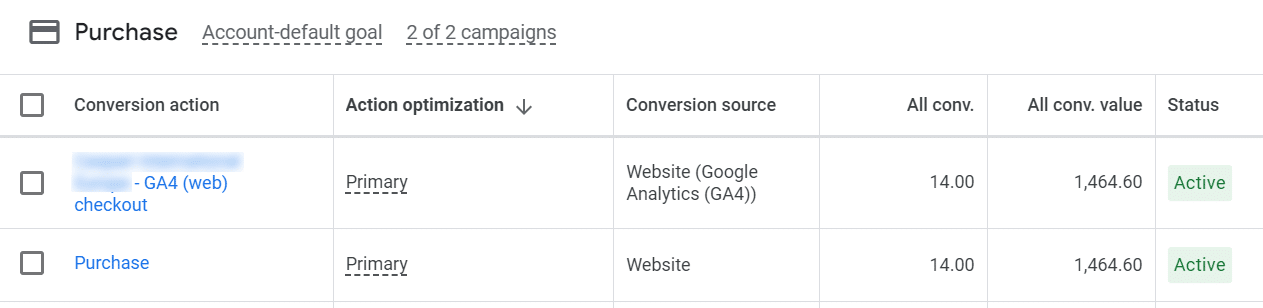
Here’s an example I recently found for a new Google Ads client. In this scenario, the client is using both the Google pixel and the GA4 purchase event to track purchase conversions in Google Ads.

Using both the Google pixel and the GA4 purchase event to track purchase conversions in Google Ads

The two purchase events (pixel-driven and GA4 event-driven) are both being counted as a purchase conversion in Google Ads, and their combined conversion value would count as the total purchase conversion value. 

This means that although the actual purchase conversion total is 14, it would be counted as 28, and the conversion value, which should be $1,464.60, would be doubled to $2,929.20. 

Let’s review how these inaccuracies affect campaign performance. 

For a campaign that uses a bid strategy of target CPA, the campaign would use the 28 purchase conversions as the total instead of the actual 14 purchase conversions. 

If we set our target CPA at $10/conversion, the campaign then believes that the total cost for the campaign should be as high as $2,800 for 28 conversions; whereas the total cost should only be $1,400 for the actual 14 conversions. Incorrect data can lead to the campaign spending too much based on our stated goals.

Organizations need to minimize inaccuracy to help ensure that the data that passes back to the ad platforms is as correct as possible. Perform an analytics and advertising audit and check to be sure data is passed correctly.

Dig deeper: How to combine GA4 and Google Ads for powerful paid search results

Get the daily newsletter search marketers rely on.


In addition to user-created data inaccuracy, cookie tracking, which has traditionally been how we measure conversions from digital ads, can also create data inaccuracy. Cookies, by the very nature of how they work, have limitations to their data visibility. 

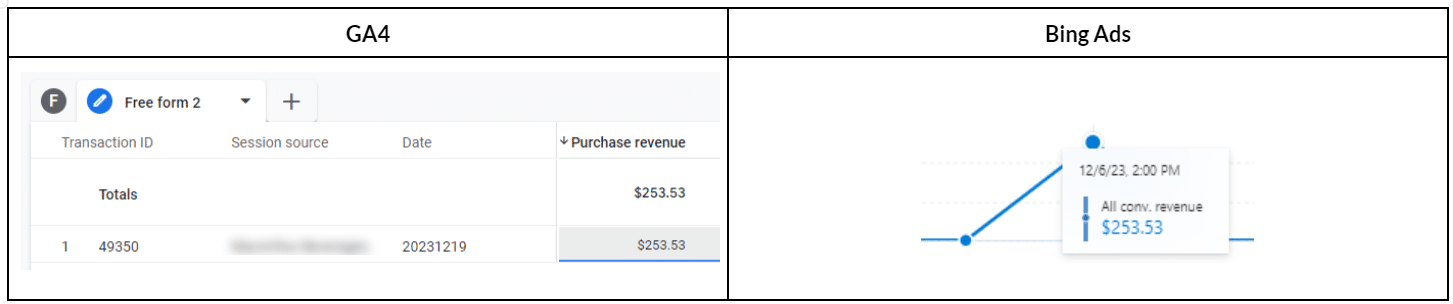
Here’s an example of how cookies can lead to data inaccuracy. In this client’s case, they are running Microsoft Ads and are tracking with the Microsoft UET tag. The client also sends email promotions to its email list. Both channels are also tracked using events in GA4. 

GA4 and Bing Ads cookie tracking inaccuracy

The company had a purchase for $253.53. In GA4, the session source for this conversion on 12/14 was an email marketing campaign. 

However, in Microsoft Ads, the same purchase event was tracked by the pixel and attributed to the original Microsoft Ad, which the buyer clicked on 12/6, even though the buyer didn’t purchase until after the email on 12/14. 

Microsoft Ads’ pixel claims the purchase conversion wholly for Microsoft Ads because the pixel doesn’t have the holistic view we have in GA4, where we track multiple channels’ performance. 

While the ad contributed to the conversion, it was not ultimately the last touch channel. In reality, Microsoft Ads should likely only have 50% of the credit for this purchase, but because the pixel cannot see all of the data, it attributes 100% of the credit to Microsoft Ads. 

If we spent $126.77 on the campaign and generated the reported $253.53 in revenue, then our ROAS is 200%. But if we were tracking and attributing the sale to only give 50% to the Microsoft Ad, then the actual ROAS would only be 100%. 

So, if our bid strategy is a target ROAS of 200%, the pixel assumes we have met this threshold when perhaps we have not.

While this is a simple, two-step customer journey, many customer journeys are much more complex, with multiple steps in between. 

Additionally, if your organization does not use a single source of truth (SSOT), such as GA4, for reporting, then each channel manager may attribute the same conversions to their channel. 

In our client example, the Microsoft Ads manager and the email manager would both count this single purchase as $253.53 in revenue for a total across both platforms of $597.06 in revenue generated, which will not match our actual purchase revenue.

Dig deeper: Tracking in 2024: Where we are and how to prep

Ad platform cookies are considered third-party cookies because they are not cookies generated directly by your website.

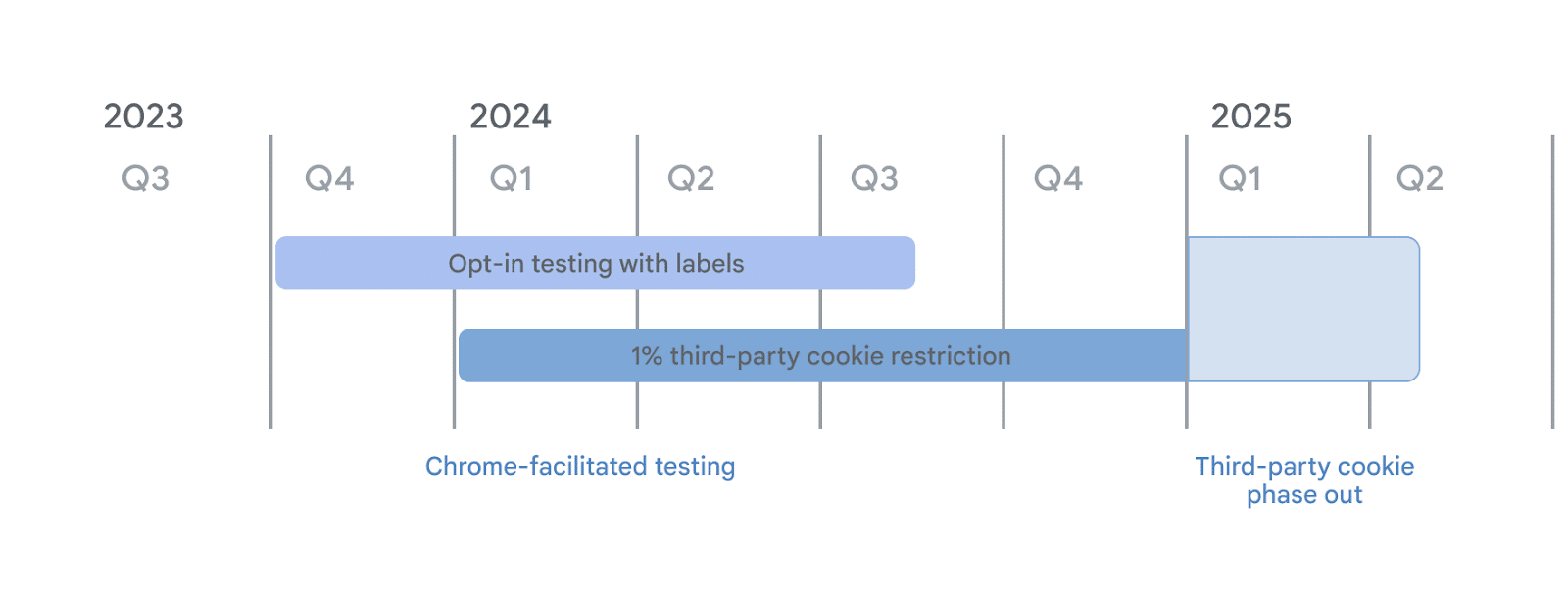
To become more compliant with various privacy laws, Google is in the process of phasing out third-party cookie tracking. 

Google’s updated timeline for third-party cookie phase-out.

While cookie tracking hasn’t always provided the most accurate data, it’s been the workhorse we’ve relied on as digital marketers. However, there’s a new option your organization should be moving to now, ahead of the cookie phase-out, to ensure data continuity and accuracy.

If you advertise on Google, Facebook, LinkedIn, TikTok, Pinterest or Snapchat, you may have seen their attempts to have advertisers adopt their conversion APIs. 

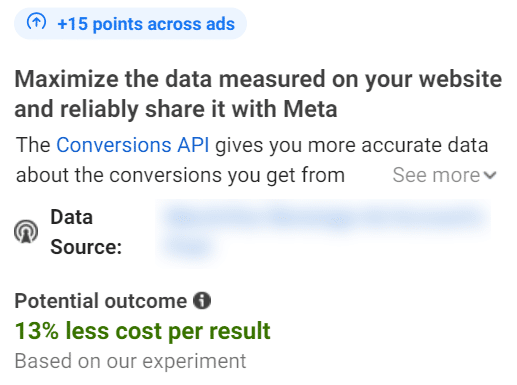
Unlike third-party cookies, which rely on the browser to set and be read, conversion API-based tracking sends user information directly from the platform’s server.

Example of Meta’s estimation of projected improvements when the Meta Conversion API is implemented vs. the traditional Meta pixel.

Since the conversion API method works on the server side and doesn’t rely on the browser, it can provide more accurate data because it doesn’t face certain limitations, such as ad and cookie blocking software and the tunnel vision that pixel tracking incurs.

Getting the data right

Your organization can take two main steps now to shore up your conversion data with ad platforms. 

  • First, audit your ads to ensure that users are tagging and tracking conversions correctly. Look for common missteps, similar to the Google Ads purchase example. 
  • Second, convert to the conversion API (CAPI) method. Implementing CAPI can be a bit technical, so you may need your web developer to assist.


from Search Engine Land https://ift.tt/aVu49oA
via IFTTT

Can AI perform technical SEO analysis effectively?

Can AI perform technical SEO analysis from flat data?

Generative AI has made significant strides in various fields, including SEO.

This article explores a crucial question: Can AI effectively perform technical SEO analysis using raw crawl data?

We’ll examine the capabilities of ChatGPT in interpreting Screaming Frog crawl data and generating SEO recommendations. 

Leveraging generative AI for technical SEO

My Search Engine Land articles often examine in-depth technical applications where SEO and AI can collaborate, resulting in increased efficiencies. For example, I have used AI to generate alt text from image files or product descriptions from PIM data.

However, many marketers are less technical and may struggle to blend OpenAI’s API, Python and spreadsheets. Some marketers would rather hand AI the tech data and receive clear human insights. 

As such, I thought I would produce an article examining the effectiveness of AI in interpreting technical SEO data. Even if you’re not communicating with AI models via programmatic API access, many AI assistants (ChatGPT, Google Gemini) offer user-friendly chat interfaces. We will explore ChatGPT in this article.

Lately, the ability of these AI-powered chat interfaces has been growing. For example, OpenAI’s ChatGPT has recently evolved from GPT-4 to GPT-4o. The new GPT-4o model comes with many feature changes:

  • GPT-4o is much faster than GPT-4. It has a similar standard of accuracy to GPT-4, while responding at pace, more similar to GPT-3.5-Turbo.
  • GPT-4o is less reliant on plugins or custom GPTs to access web content.
  • GPT-4o will seek web content far more frequently to generate its results, making the produced material “fresher.”
  • Though true, the web is poorly curated and full of misinformation. Many feel that the refined data model of GPT-4, with fewer web requests – actually produced superior results to GPT-4o.
  • There’s no arguing that GPT-4o is at least comparable to GPT-4. It is much faster and far more interactive. It can work with more types of attached data, produce more types of media and is web-capable.

With GPT-4o now more capable of searching web content, it could be more helpful for marketers, even those who lack technical skills. However, there are concerns about its ability to access the web, as past experiences with tools like Google’s Bard and Gemini showed inferior results.

To test GPT-4o, we’ll give it specific technical SEO crawl data instead of generic analysis tasks. This will help us see how much ChatGPT has improved and if it can be useful for technical SEO analysis.

Analyzing Screaming Frog crawl data for insights via ChatGPT

The “internal all” export from Screaming Frog is the bread-and-butter foundation of most technical SEO insights. 

That single export may be pivoted in several ways to comment on metadata issues, canonical tag conflicts, hreflang issues etc. 

Will AI pick up on such issues? Will AI hallucinate or misdiagnose issues where none are present? Let’s find out.

We will use the Butcher’s Dog Food company website as a testbed for these tests. They are a UK dog food supplier, and their site is about the right size for our proposed activities.

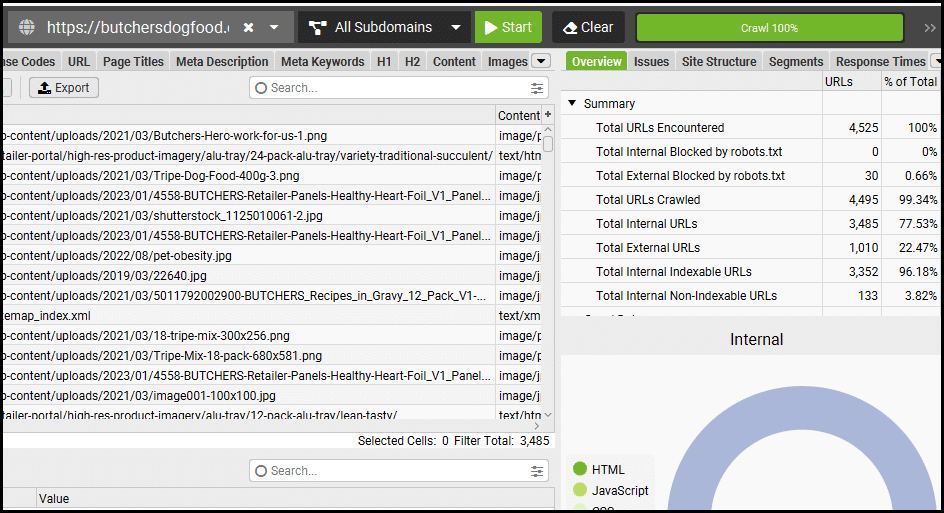
First, we will crawl Butchersdogfood.co.uk:

Butchersdogfood.co.uk crawl data

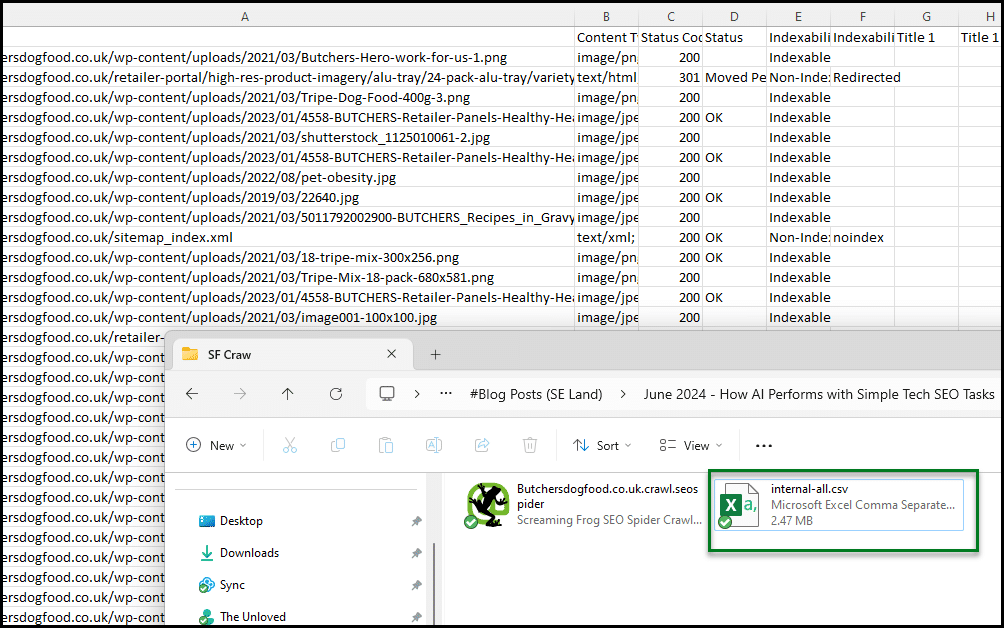
Over 3,000 internal addresses were discovered. Now, we can export the list of internal addresses to a CSV file:

Butchersdogfood.co.uk crawl data export

Now, we can feed the CSV file to GPT-4o and ask for some recommendations. Most people don’t write prompts as complex as I do. They write shorter prompts and then refine them. As such, I will attempt to follow that behavior.

Upload crawl data to GPT-4o

The response contained many recommendations, but most were disappointingly generic. For example, recommendations like this:

  • “Several URLs point to image files (e.g., PNG, JPEG). Ensure that all images are optimized for web usage to reduce load times. This includes compressing images and using appropriate formats.”

This recommendation is disappointing because ChatGPT actually did have access to response time and file-size data as per image addresses. So, the response could potentially have been more specific.

Here’s another example of very generic guidance:

  • “Ensure that canonical tags are correctly implemented to avoid duplicate content issues. Each page should have a self-referencing canonical tag unless it’s a deliberate duplicate.”

Since ChatGPT has access to the datasheet, it should be able to work out (roughly) which URLs are the main addresses and which are not (parameters in the URL string, etc.).

Thus, ChatGPT should be able to isolate canonical tag problems rather than give general (and useless) guidance.

Let’s push it a bit harder:

GPT-4o crawl data-related prompts

The guidance is still relatively vague, even when we iterate and create a more detailed prompt. Many pages are always missing canonical tags, such as image addresses, which do not support HTML.

The response should have been more specific and detailed, explaining why certain addresses needed canonical tags but didn’t have them.

As part of the response above, some more detailed feedback was given:

GPT-4o crawl data recommendations

Wow, these recommendations are a total mess.

In a way, they are impressive despite being totally wrong. I might expect an inexperienced junior SEO person whose been thrown into the technical SEO deep end to make similar recommendations. 

The advice would be wrong, but there are indeed signs of intelligence. You must remember that it still takes some degree of intelligence to go off on tangents and produce relevant yet inaccurate analysis. The work is unusable, but there are signs of a genuine attempt.

As humans, we’re prone to holding AI to unfair standards. If AI produces something that is wrong or incorrect, we say that AI has failed to achieve human understanding. However, many of us (real humans) also fall short, and this happens often. 

For me, the question is: Has AI failed in a way that demonstrates some human-like attempt at completing the task?

I think signs are positive for the future in terms of such applications for accessible (chat interface) AI interactions. For now, though, it would be disastrous to act on the recommendations given. 

Identifying a redirecting URL as potentially important (even though it is a redirecting address) and then assuming that work may or may not need to occur on the final destination URL is some of the most woolly thinking I have personally encountered.

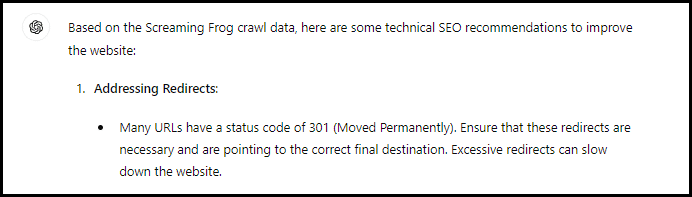
The only interesting pointer that ChatGPT was able to come up with was that a number of addresses on the site resulted in 301 redirects, and there may be some defective architecture:

GPT-4o interesting recommendation

The above response was given after our very first message before we began pushing AI to think in more specific terms. This was actually the first recommendation that ChatGPT gave, and in some ways it is interesting:

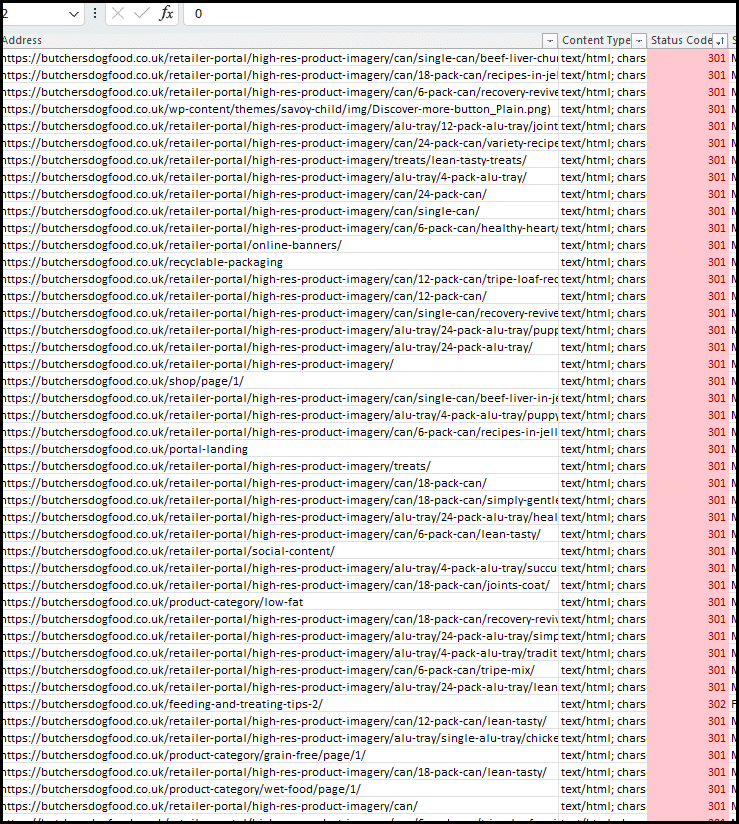
Redirected image addresses from crawl data

There are around 100 redirecting addresses. Many of these are redirected image addresses. Some seem like they were once true pages or perhaps are trailing slash redirects. Others revolve around pagination.

This was an interesting lead, but most other recommendations were generic or misleading. ChatGPT’s attempt at specific advice was semi-intelligent, but the suggestions would have wasted time or caused more problems. 

I’d grade this work a D or E, though many machines wouldn’t score that high on technical SEO from flat datasheets. I’m impressed, but I don’t recommend using AI for this level of technical SEO analysis yet.

Get the daily newsletter search marketers rely on.


Comparing AI insights to Ahrefs’ technical audit

Ahrefs has a sophisticated cloud-based SEO crawler. While Screaming Frog’s data can be more accurate, Ahrefs still provides solid data and better insights. I use both tools for site audits.

If we look at the output from a full Ahrefs technical SEO crawl, we may then be able to determine how close GPT-4o came to finding the truth. Let’s look at the Ahrefs overview:

Comparing AI insights to Ahrefs’ technical audit

Wow, that’s an excellent rating! Well done to the Butcher’s Dog Food team.

Despite the high rating, some issues still persist. This is totally normal and is usually nothing to worry about. 

What’s interesting here is that the remaining issues revolve around redirecting addresses and images, which may have too large file sizes. This is interesting because these were some of the top issues picked out by our AI assistant based on Screaming Frog data.

What does this mean? Was the AI right all along, and perhaps we judged ChatGPT too harshly for “generic sounding” recommendations that were actually accurate? 

Yes and no. Humans often feel the need to defend their roles against advancing technology, which can create a bias against it. This bias is common, even among those in the digital field.

However, this technology is not an immediate threat to technical SEO specialists. The advice given was not usable, but the AI’s mistakes were intelligent, similar to those of an inexperienced human who shows promise. 

The general focus of the insights, like redirects and image compression, was accurate even if the specific advice wasn’t.

The final verdict

GPT-4o is a vast improvement over GPT-3.5-Turbo. However, I’m unconvinced that there is significant (or any) improvement over GPT-4, which seems to hallucinate less. 

Currently, I see GPT-4o as a good middle ground between GPT-3.5-Turbo and GPT-4. To me, the results of GPT-4 seem superior. But GPT-4o is around as fast as GPT-3.5-Turbo and is more interactive. 

I guess time will tell which model users will prefer. I’m willing to wait longer for GPT-4 to produce superior output, even if that output is limited via a (curated) data model.

ChatGPT’s advice was poor. It missed key points and offered generic, unhelpful suggestions. Its attempt at specific advice also failed.

However, there were signs of intelligence in its errors, similar to an inexperienced human making mistakes. This shows potential for improvement.

For now, don’t rely on this technology for technical SEO analysis, especially through simple chat interfaces. But keep an eye on it – an AI capable of providing valuable insights may be closer than we think.


from Search Engine Land https://ift.tt/V95ln8T
via IFTTT
Reddit: Your new online reputation challenge

Reddit: Your new online reputation challenge

Whenever big brands partner up, the digital landscape changes.

In this article, you will learn:

  • Why AI firms are eager to partner with Reddit.
  • How your online reputation can be affected when major platforms partner up.
  • How to leverage this new situation to your brand’s advantage.
  • Tips on how to monitor the impact your brand is making on Reddit.

When a growing discussion platform becomes AI platforms’ new best friend

While more and more sites see their content outranked by Reddit threads, the discussion platform has just announced its partnership with OpenAI.

Reddit’s popularity has increased significantly since early 2022, with a notable rise in organic visibility since 2023, as shown by Google Trends.

Google Trends, “reddit”, U.S.
Reddit.com’s organic visibility, via Ahrefs

In recent months, search has expanded beyond traditional search engines into generative AI tools like ChatGPT, Gemini, Copilot, Claude or Perplexity.

Generative AI gets better with context. As a result of the race for leadership in AI-powered search, platforms have a strong (and urgent) interest in using high-quality content as training material for their algorithms.

The new association between OpenAI and Reddit makes sense not just because Sam Altman, holding 8.7% of Reddit’s stock, is associated with OpenAI, but also because ChatGPT aims to evolve into a search engine.

Full access to Reddit’s threads provides a critical competitive advantage against upcoming competing platforms like Anthropic’s Claude, which confirms not having access to Reddit threads at this time:

Claude can't access Reddit

At the same time, Perplexity allows focusing specifically on Reddit when using the tool, but the data seems to be coming through Perplexity running a Google search.

Dig deeper: How the Google-Reddit partnership impacts brand management

What does this mean for a brand’s online reputation?

Generative AI talks about your brand

Although the LLM can generate completely new texts, specific text passages are often reproduced almost literally.

With Reddit being used as a source of training data, we might see this happen more frequently.

ChatGPT now performs real-time searches for some queries, but this will not always be an option. A pragmatic solution for LLMs trying to give a quick reply might be directly copying partial or complete answers from popular Reddit answers.

Branded searches and searches for a product or service are directly impacted by the LLM’s “perception” of a brand.

Perception can be understood here as the context in which the LLM was trained and whether that context was comprehensive enough, consistent, coherent, positive or negative.

AI tools often generate responses purely based on their training material, putting your brand’s reputation at risk, as this ChatGPT example shows:

ChatGPT brand reputation risks

Reddit’s upvoting system to the rescue

One reason Reddit is a great platform for large language models is its upvoting system. 

The platform is well-moderated, with specific guidelines for each subreddit. Answers other Reddit users value, frequently will get upvoted. Getting many upvotes correlates with a helpful answer – an indicator LLMs can efficiently process and use for more selective training and potentially quick responses.

What goes into a system impacts the output.

Reddit now feeds into Google’s and OpenAI’s language models. Both brands will happily take advantage of the often curated training data to reproduce good answers directly or pass them through their generative process to answer a user query.

Whether your brand, products or services are mentioned in such a response might strongly depend on your brand’s visibility and popularity on the platform and the sentiment around related messages.

Get the daily newsletter search marketers rely on.


4 practical tips to leverage Reddit for online reputation management

Now that Reddit directly feeds into Google and OpenAI, it provides a great entry point to leverage for online reputation management (ORM).

Here are practical tips you can implement right now.

Tip 1: Keep a branded profile

AI just aims to connect the dots. Keeping a branded profile, ideally with your brand name in it, will help establish your brand on the platform.

Link to your Reddit profile from your website, About us page and other social media networks, and maybe some of your articles, so the connection is clear and the profile is seen as legit.

Tip 2: Obey the rules

Every platform has its rules, and if you have not been active on Reddit yet, it is essential to:

  • Find and subscribe to subreddits that are relevant to your brand and products or services.
  • Comply with any subreddit-specific guidelines to avoid getting banned.
  • Build an authentic presence leveraging your brand name.
  • Engage naturally in conversations where you can add value.

Tip 3: Share helpful tips and advice – or your brand as an option

While self-promotion is usually not well received on discussion boards, on Reddit you will frequently find people drop brand names and product names, sometimes even including a link. 

Brand mentions in the right context help language models understand more details about a brand and can help build trust.

When sharing advice, pay attention to making it rich in context, clear and actionable where possible. Using simple language will help neurolinguistic processing engines comprehend the sentence structure and identify the entities.

Helpful advice will facilitate more upvotes, establishing your response as one of the most trusted ones on that page – not a bad signal next to a branded user profile and potentially a message mentioning your brand.

Tip 4: Be strategic and consistent

Reddit has grown big enough to deserve its own strategy:

  • What exactly do you want to achieve by participating on Reddit?
  • What steps will you take on the platform to leverage it for your overall brand reputation goals?

Online reputation management requires consistency:

  • Be consistent! Google Alerts can help find Reddit threads relevant to your industry, your brand or your brand’s main representatives
  • Establish a routine of consistently participating in conversations related to your industry

How to track the impact

There are two simple ways to track your impact on Reddit: 

  • Brand monitoring.
  • Referral traffic.

Brand monitoring will help you track how often your brand is mentioned on the platform. Sentiment analysis will then let you know if the context is positive, neutral or negative.

If your website gets mentioned with its domain or URL, Reddit will suggest a clickable link.

When a visitor comes to your website through a link on Reddit, the traffic can be tracked in Google Analytics 4 under Referrals.

Embrace the facts

There have been many discussions about whether Reddit results should appear in Google searches. Now, we will also see them come up directly (or indirectly) in ChatGPT. 

It might be time to embrace the facts: Yet another platform has become a major player in the search and generative AI space. Leverage it to your brand’s advantage!


from Search Engine Land https://ift.tt/EG8BIqv
via IFTTT

Friday, June 21, 2024

Google turns off Universal Analytics July 1: What you need to know

Google Analytics 4

Google is discontinuing Universal Analytics, its legacy web analytics platform. This is the final shift in the transition to Google Analytics 4 (GA4).

Why it matters. Businesses that relied on Universal Analytics for website measurement and data analysis need to act quickly to avoid losing access to their historical data and maintain continuity in their analytics capabilities.

Key dates.

  • July 1: Users will lose access to Universal Analytics data and interface.
  • After July 1: All Universal Analytics data will be permanently deleted.

Why we care. We’ve finally reached the “now or never” moment. Export your historical data or you’ll lose it all in July.

The big picture. This transition marks a significant shift in Google’s analytics offerings, with GA4 designed to be more privacy-focused and adaptable to future changes in technology and regulations. However, search marketers remain unimpressed with GA4 – many of them still absolutely hate GA4.

Details:

  • Universal Analytics properties are identifiable by tracking codes starting with “UA-“.
  • Google has been automatically creating GA4 properties for users since March 2023.
  • Several features, including real-time reports and certain advertising capabilities, have already been deprecated.
  • There will be no visibility of historical UA bidding, audience or conversion data.
  • Universal Analytics 360 contract holders will no longer be able to create standard Universal Analytics properties.
  • Publisher or other product integrations (e.g. UA audience list, BigQuery exports, UA API requests) will be unavailable when services have stopped.

What to do.

  • Export your Universal Analytics data before July 1, 2024.
  • Set up and configure a Google Analytics 4 property if you haven’t already.
  • Migrate Google Ads links and create new conversions based on GA4 events.

Bottom line. If you haven’t already, you need to act swiftly to preserve your historical Google Universal Analytics data.


from Search Engine Land https://ift.tt/xcTCXvB
via IFTTT

Amazon Ads in 2024: Maximizing Sponsored Brands campaigns

Amazon Ads in 2024: Maximizing Sponsored Brands Campaigns

Amazon’s Sponsored Brands have always been a central component in showcasing brands and capturing customer attention on the platform. Today, many exciting new features are available to revolutionize your advertising strategy.

This article tackles the latest updates on this Amazon ad format and strategies to maximize its potential. With recent advancements in targeting, ad formats, analytics and optimization, there’s never been a better time to refine your approach and achieve outstanding results.

What’s new in Amazon Ads?

Enhanced targeting options

Amazon has significantly upgraded its targeting capabilities for Sponsored Brands campaigns. These enhancements allow advertisers to pinpoint their ideal customer segments with extraordinary precision. 

Expanding criteria to include specific demographics, purchase behaviors and detailed interest categories allows advertisers to reach a broader, more relevant audience. This enhances the impact and efficiency of your campaigns.

Improved ad formats

Amazon recently launched several new ad formats designed to capture and retain customer attention. Among the most notable are video ads and interactive ad formats. 

  • Video ads enable the delivery of visually compelling messages, helping to communicate your brand narrative more effectively. 
  • Interactive ads provide an immersive experience that can boost engagement and drive higher conversion rates. These new formats offer innovative ways to connect with your audience and increase brand visibility.

Advanced analytics and reporting tools

Amazon’s latest updates have introduced advanced analytics and reporting tools for Sponsored Brands campaigns. These tools present deeper insights into campaign performance, helping you identify which strategies are working and where there’s room to improve. 

Detailed metrics on engagement, click-through rates, conversion rates and more are now readily accessible. This data lets you make informed decisions, optimize your campaigns in real time and achieve superior results.

AI-powered optimization

AI is at the forefront of Amazon’s latest innovations. The new AI-powered optimization features automatically adjust your bidding, targeting and ad placements to maximize performance. 

AI analyzes large data sets to find hidden patterns and emerging trends, helping you stay ahead. Using AI can significantly improve efficiency and ROI.

Integration with Amazon Marketing Cloud

Amazon Sponsored Brands now feature deeper integration with the Amazon Marketing Cloud, providing a comprehensive view of your marketing efforts across the Amazon ecosystem. 

It facilitates seamless data sharing and analytics, allowing you to synchronize your ad campaigns with other marketing activities. With this integration, you can create a more cohesive and impactful marketing strategy that elevates your brand presence across Amazon.

Strategies for maximizing Amazon Sponsored Brands ads

1. Leverage enhanced targeting

With the launch of more sophisticated targeting options this year, refining your approach to audience segmentation is crucial.

  • Start by analyzing your customer data to pinpoint the most relevant demographics, behaviors and interests that align with your brand. 
  • Use these insights to create highly targeted ad campaigns tailored specifically to your ideal customers. For instance, targeting health-conscious individuals who frequently buy wellness products can notably improve ad relevance and engagement if you sell fitness gear. 
  • Continuously monitor and fine-tune your targeting parameters to ensure you’re reaching the most valuable audience segments.

2. Create compelling ad content

The latest ad formats offer exciting opportunities to craft more engaging content. 

  • For video ads, focus on creating visually appealing and concise messages highlighting your brand’s unique value. Use storytelling techniques to captivate viewers and leave a lasting impression. 
  • For interactive ads, design immersive experiences that encourage user participation, such as quizzes, product demos or interactive catalogs. The key is to make your ads eye-catching, informative and enjoyable, ultimately increasing engagement and conversion rates.

3. Leverage advanced analytics

Advanced analytics tools are more powerful than ever, providing better insights into your campaign performance.

  • Make it a habit to regularly review these analytics to better understand how your ads are performing. 
  • Identify trends in engagement, click-through rates and conversion metrics to pinpoint successful elements and areas for improvement in your campaigns.
  • Use these insights to inform data-driven decisions, tweak your ad content and target and bidding strategies as needed to optimize performance.

Get the daily newsletter search marketers rely on.


4. Embrace AI-powered optimization

AI-powered optimization eliminates much of the uncertainty in managing ad campaigns.

  • Set up AI-driven features to automatically adjust bids, targeting and placements using real-time data analysis. This saves you time and guarantees optimal campaign performance. 
  • However, don’t just set it and forget it.
  • Regularly review the adjustments to ensure they align with your overall marketing goals. Make manual tweaks when necessary to refine performance and maintain a competitive advantage.

5. Capitalize on Amazon Marketing Cloud integration

Integrating with Amazon Marketing Cloud allows you to create a more holistic marketing strategy.

  • Leverage the data and analytics from the Marketing Cloud to comprehensively understand your customer journey across different touchpoints. 
  • This empowers you to synchronize your Sponsored Brands ads with other marketing efforts, such as email campaigns, social media advertising and in-store promotions.
  • By aligning these efforts, you can foster a unified brand experience that strengthens customer relationships and boosts overall marketing effectiveness.

Tips and best practices for ongoing success

Stay updated with Amazon’s changes

Amazon frequently enhances its advertising platform with new features and improvements. Staying informed about these changes is vital for maintaining a competitive edge. Here are some steps to ensure you’re always up-to-date:

  • Subscribe to Amazon advertising’s newsletter: It provides regular updates on new features, case studies, and best practices.
  • Join industry forums and groups: Engage with communities on platforms like LinkedIn, Reddit and industry-specific forums where professionals share insights and experiences.
  • Attend webinars and conferences: Amazon and other marketing organizations often host events that can provide in-depth knowledge and networking opportunities.
  • Follow thought leaders: Identify and follow experts in the Amazon advertising space. Their blogs, social media posts and publications can offer valuable insights and tips.

Experiment and iterate

The digital advertising landscape constantly evolves, making experimentation and iteration essential for success. Here’s how to effectively test and refine your strategies:

  • A/B testing: Regularly conduct A/B tests on various elements of your ads, such as headlines, images, calls to action and targeting options. Analyze the results to determine which variations perform best.
  • Pilot new features: Whenever Amazon releases a new feature, consider running a small-scale campaign to test its effectiveness before fully integrating it into your strategy.
  • Monitor competitors: Keep an eye on what your competitors are doing. Analyze their ad formats, messaging and targeting strategies. Learn from their successes and mistakes to improve your own campaigns.
  • Review performance metrics: Set up a schedule to review your campaign performance metrics regularly. Look for trends, spikes and drops in engagement and use this data to make informed adjustments.

Actionable strategies for continuous success

Building a sustainable strategy requires actionable steps that can drive ongoing success. Here’s how to ensure your campaigns remain effective:

  • Regularly update your product listings
    • Ensure your product listings are always up-to-date with accurate information, high-quality images and optimized keywords.
    • Make sure your titles, bullet points and descriptions are clear, concise and compelling.
  • Optimize bids and budgets
    • Regularly review and adjust your bids and budgets based on performance data.
    • Increase funding for high-performing campaigns and decrease spending on less effective ones.
  • Leverage seasonal trends and events
    • Plan and execute campaigns around major shopping seasons and events like Black Friday, Cyber Monday and Prime Day.
    • Customize your ads to align with seasonal trends and special promotions.
  • Utilize negative keywords
    • Regularly update your negative keyword list to exclude irrelevant searches that don’t convert.
    • This helps to optimize your ad spend and improve your ROI.
  • Enhance customer reviews and ratings
    • Actively seek customer feedback and encourage satisfied customers to leave positive reviews.
    • Address any negative feedback promptly and use it to improve your products and services.
  • Implement retargeting campaigns
    • Use retargeting to reach customers who have previously viewed or interacted with your products.
    • Craft personalized ads that remind them of the products they are interested in, increasing the likelihood of conversion.

These practical tips in your marketing strategy will enhance your Amazon Sponsored Brands campaigns and support continuous improvement. This proactive approach keeps your brand competitive and successful.

Whether you’re seasoned in selling on Amazon or new to the platform, these insights are designed to help you secure a competitive advantage and maximize the opportunities presented to you now and in the future.


from Search Engine Land https://ift.tt/HfwUAzi
via IFTTT

Thursday, June 20, 2024

Google Search bug with indexing over the past several hours

Google seems to have a bug where it has not indexed new content across both large and smaller publishers over the past several hours. The issue seemed to have started at about 5 p.m. ET, when Google Search was not showing most of the new content that content creators were publishing to their websites.

What are we seeing. Sites as large as AP News, CNN, Wall Street Journal, NY Times, Fox News, CNBC and even small sites like the Search Engine Roundtable, are all seeing issues with new content not being shown in the Google Search results.

This can be a Google Search bug with indexing or serving or maybe some rendering issue with the Google Search interface.

Here are some examples of the Google Search results filtered to show content published in the past hour from some of these publications that publish dozens of stories per hour. You can see some sites have no pages shown for content published on them in the past hour, some have one, some have three and so on:

Checking Google Search tools. So when I was debugging this after covering this issue a few hours ago on the Search Engine Roundtable, I noticed the story I published on this news was not indexed by Google and is still not indexed a few hours later. The content published on this site normally gets indexed within minutes by Google Search.

Google Search Console’s URL inspection tool still says the URL is not indexed, hours later:

When I search for the story headline, filter by content published recently, or even search by the URL of the story, Google Search is not returning it.

No word from Google yet. I have reached out to Google but have still not heard back on this issue. Google has still not published an issue update on the Google Search Status dashboard – I suspect they will eventually.

Spam update the issue. Is it possible that the June 2024 spam update broke Google Search? That is hard to say and it is, of course, just speculation. But we know with the last core update, Elizabeth Tucker from Google said their main goal was to ensure that algorithm update did not break Google. We also know that sometimes Google experiments cause issues in Google Search.

Others having issues. I posted the news on social media, including X and there are a lot of folks noticing this issue now. Just click through to my post on X and you’ll see a lot of the replies and quotes:

Why we care. If you produce content, like a news publication, and notice a drop in Google traffic over the past several hours – this may be why.

Hopefully Google will fix it and reply with more detail. Google clearly wants to ensure searchers can find the content, especially new content, that they are looking for. So I am sure Google takes these reports seriously.

Google is aware of the reports, but has not yet replied with any details. We will update this story when we hear back.


from Search Engine Land https://ift.tt/skB59Ln
via IFTTT